
Living Water In Nepal
By Lori Nuffer
Our Toyota 4×4 Land Cruiser bumped and jolted over the rugged road. We were traveling through the Lamjung District in the beautiful Himalayan foothills of Nepal. The road was rutted and rocky with steep drop-offs often just eight inches from the edge of our tires. Our driver was expertly navigating the vehicle, even if my husband Richard and I were a little white knuckled from gripping the handholds in the back seat.
Richard and I serve as full-time missionaries in the India New Delhi mission. Our assignment is in the country of Nepal, where we function as Country Directors for Latter-day Saint Charities, the humanitarian arm of the Church. Because the government of Nepal does not officially recognize The Church of Jesus Christ of Latter-day Saints, Latter-day Saint Charities coordinates all humanitarian work in the country.
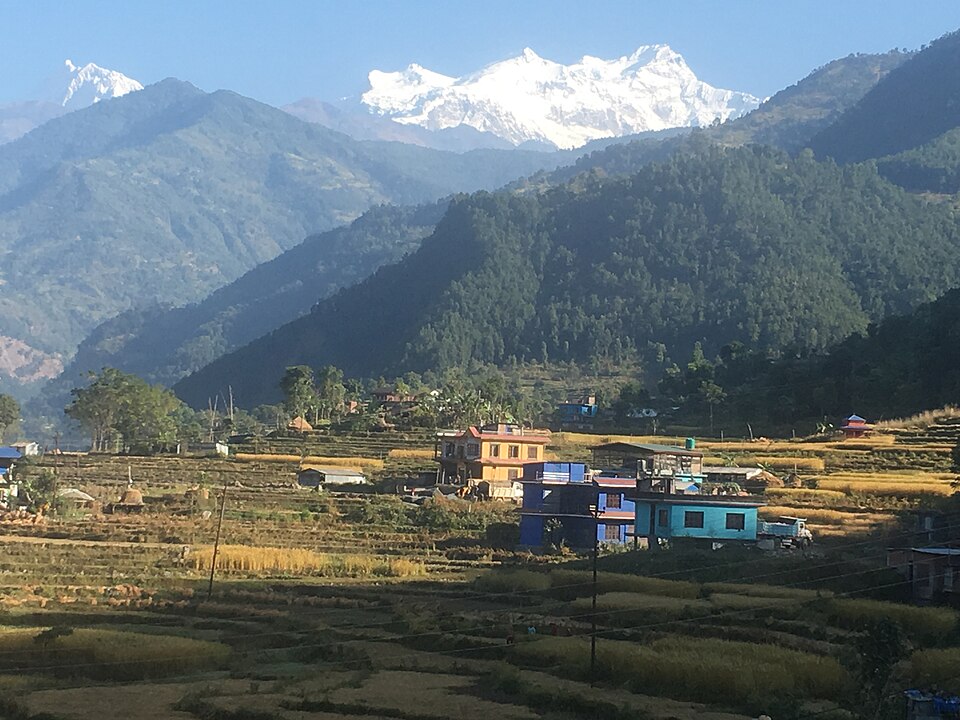
This beautiful, bumpy day found us traveling with Kiran Neupane, a native of Lamjung. Kiran serves as the Programs Director of Choice Humanitarian Nepal. Choice is a non-governmental organization (NGO) that collaborates closely with Latter-day Saint Charities to bring water to remote rural households. Kiran grew up in the Lamjung foothills. As a “self-proclaimed mountain goat,” he regularly travelled the often-steep paths of the foothills, sometimes walking more than four hours to get to his destination. He knows the area, and he knows the needs of the local people. One of their greatest needs is convenient access to clean water.
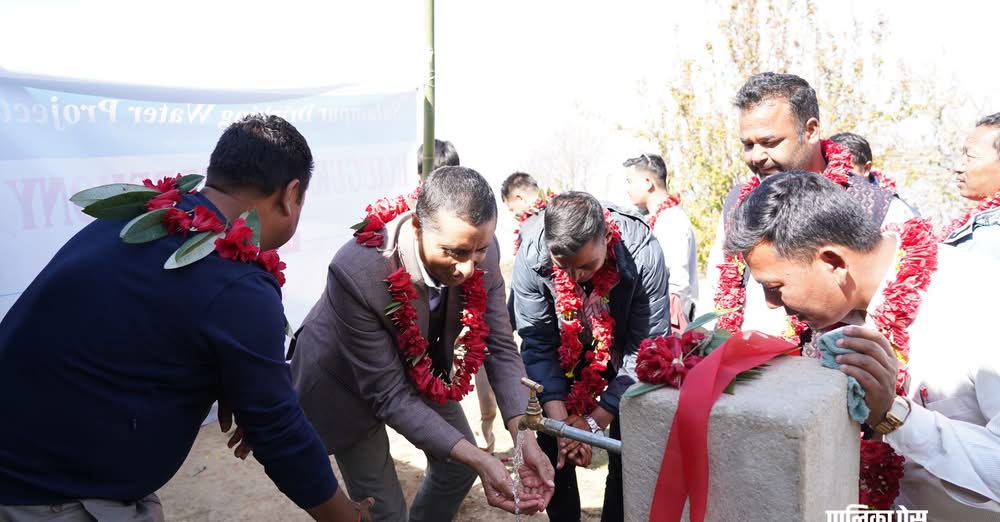
With funding from Latter-day Saint Charities and approval from district government offices, Choice engineers have designed water supply systems in several rural communities. Community residents contribute much of the labor to build them. The goal of these water projects is to install a water tap in the yard of every home. Prior to the water projects, women and children often walked up to two hours each way to retrieve the daily water needed by their families. In addition to the walk, they often had to queue up for two hours waiting for a turn to fill their containers from the spring. It was grueling labor. The time spent collecting water kept children from attending school and added to the duties of already burdened mothers.
Our purpose on this beautiful spring day was to inspect one of the completed water systems and assess the impact of the household water taps on local families. Kul Prasad Tiwari, a mentor and rural development specialist from Choice, had joined us. Navigating the rocks and ruts in the road, we continued higher and higher into the foothills to the Sundarbazar municipality. We randomly drove into the yard of Suk Bahadur Gharti and Ambika Gharti, his wife. The Gharti family is one of 135 households that received a water tap in their yard. As we ventured into the small, well managed property, Kiran, in his friendly way, introduced the four of us. Suk Bahadur and Ambika found stools and chairs and invited us to sit in their yard overlooking the sweeping vista of the foothills. They graciously served us a sliced cucumber with spices for refreshment as they described the impact easily accessible clean water had made in their lives.
Suk Bahadur and Ambika had received a small patch of land on this steep hillside as a part of the family heritage. The hand-terraced red clay of their land did not retain enough moisture to grow crops during the dry season. They had experimented with growing grains, but the crops did not produce enough yield to meet the family’s dietary needs, especially after their two children were born. Many of the men in Sundarbazar had left and worked as migrant laborers out of Nepal, sending money home. Suk Bahadur remained, choosing not to leave his growing family.
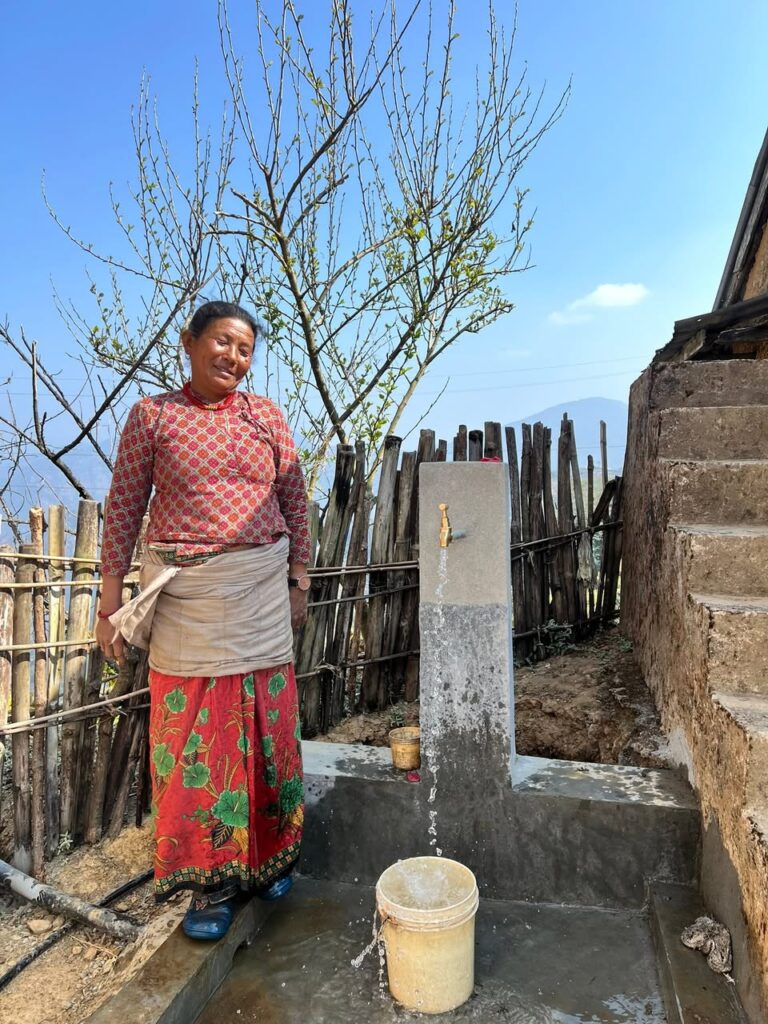
Since the coming of an outdoor water tap for each household, however, families in Sundarbazar have new hope and a clearer vision about their lives. Suk Bahadur and Ambika proudly showed us their kitchen garden where vegetables, including the cucumbers we ate, gourds, and beans are growing. With funding from Latter-day Saint Charities, the family has built a buffalo shed and plans to add two more milking buffalo. They have established beehives and are raising and butchering pigs and chickens. They sell all their excess products at the local market. “There is no problem with the market. Everything we produce sells,” reported Suk Bahadur. Ambika added, “Especially, the women are happy with the access to water. Our lives have become easier. We thank you for coming to a rural village like ours and helping us with the projects of our need. I do not have enough words to describe how…happy we are.” The Gharti’s no longer worry about providing sufficient nutritious food for their family as they had in the past. They no longer worry about the future of their children. All of this became possible because of convenient and reliable access to water.
And the change that is occurring in future generations is astounding. With their entrepreneurial spirits, Suk Bahadur and Ambika have been able to save the equivalent of approximately $7.00 USD a day. They have been using this surplus to support the education of their children. Their son, Manish Gharti, 22, is completing a bachelor’s degree in English. Their daughter, Manisha Gharti, 19, is pursuing a diploma in dental care.
As we completed the visit and returned to the Land Cruiser for the next precarious stage of our drive, we discussed the miraculous impact that access to reliable and convenient water can have on a family’s life.
Chapter two in the gospel of John describes another miraculous story involving water. As His first recorded miracle, the Savior turned water into wine to meet the needs of a family hosting a wedding in Cana. Symbolically, that water-turned-wine becomes a foreshadowing of the spiritual cleansing His blood brings to all of us. Like the good wine, His cleansing is good.
As the only missionaries currently in Nepal, we cannot share the gospel of Jesus Christ or even wear missionary name tags because of government restrictions. However, generous humanitarian contributions from families all over the world are fulfilling Christ’s second great commandment to “love thy neighbor as thyself.” These contributions are making access to reliable and convenient water possible. This water access significantly contributes to better futures for families like the Ghartis. It enables them to grow more crops and raise livestock, which provides food and nutrition security for their families. Access to convenient, clean water restores precious time to their children, enabling them to go to school every day.
Jesus Christ is the “living water.” Through our humanitarian work as a Church, we can bring His living water to His children throughout the world. Even in countries where the gospel cannot currently be taught, our brothers and sisters can feel the Savior’s love for them through water.
Lori and Richard Nuffer serve as full-time missionaries in the India New Delhi mission.