
The Earth is Crammed with Heaven
By Mary Favro
After winning the Nobel Prize for Literature in 1962, John Steinbeck joined a scientist on a collecting expedition to the tide pools of coastal Mexico. Together, they traveled to the Sea of Cortez to gather and study what they called “curiosities.”’ Essentially, they were looking for interesting sea creatures as part of scientific research. Once at the beaches, the explorers started looking around when a group of young boys came up and asked if they had lost something. “What are you searching for?” the young boys asked. “Can we help you find it?”
In his mind Steinbeck reflected: “When we really look at the natural world, what are we looking for? We look for something that will seem like truth, we search for understanding, we search for principles that show us deep patterns of life, we search for relationships between things, we are looking to be wonder-smitten by what we see.” But his verbal reply to the boys was simply: “We are looking for curios. For certain small animals.” Right away the young boys began to help them search and within minutes they found a variety of wonderful treasures. But it was the way in which the boys treated the curiosities that impressed Steinbeck the most. He documented the experience beautifully in his book Log From the Sea: “The children do more than help us to search, they help us to see. They help the grown men find what they are truly looking for– a reverence for creation.”
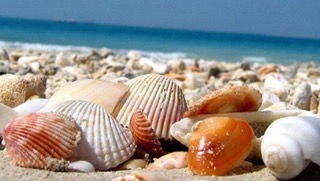
Steinbeck set out looking for truth, connection, and patterns of knowledge at the Sea of Cortez and found something that would enhance all of these pursuits. What he found would influence the very way in which he moved through the world– with a reverence for creation.
An understanding of the natural world is a source of not only great curiosity but great fulfillment. Nature proves to be our biggest ally, our greatest source of visual beauty and stimulation for the intellect. Kindling a fascination and passion for life on earth is a vital reason why we are here. When we approach the natural world with reverence, our minds are opened up to what is embedded within. We are able to make connections between what we see and divine properties that reveal the mysteries of God.

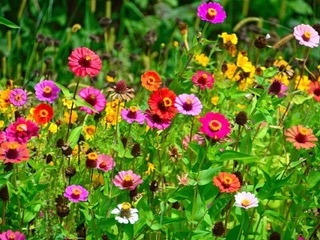
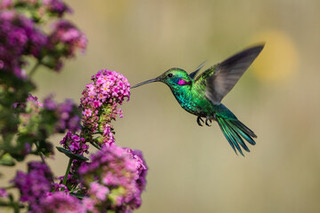
“And behold, all things are created and made to bear record of me…things which are in the heavens above, and things which are on the earth…all things bear record of me.” Moses 6: 63.
What is it that the natural world reveals about God? We enjoy plums, peaches, pomegranates and papayas. Why not just one deliciously healthy fruit? Our eyes see purple, pink, periwinkle and pastel. Why not just one color? Diversity seems to be a fundamental principle of God’s plan. He clearly celebrates diversity and invites us to appreciate and protect it too.
In the Pearl of Great Price, we read about Moses coming into God’s presence and seeing all of his Creation. Probably the most significant part of this scene is when Moses learns that God knows all of his creations. He tells Moses, “All things are numbered unto me.” Moses 1:31
God knows all things—including every single one of his starlings. Starlings are small garden birds that can be found throughout the world. Like many other species of birds, starlings gather to keep warm, protect each other from predators and exchange important information. Yet, there is something entirely unique and phenomenal about the way starlings move.
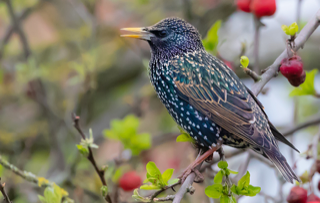
Hundreds, thousands, and sometimes millions of starlings fly together as one flock. The group ripples, whirls and waves as each bird stays close to its neighbors in a harmonious synchronicity of movement. Starlings pay attention to the birds nearest to them—they are allies. Those allies each have their own allies. They all guide each other. Astoundingly, each bird avoids crashing into others while it flies. Given the size of the flock, that may seem like a feat of engineering, but the task is actually handled at a strictly local level. A starling in flight pays attention to its closest neighbors moving in the graceful coordination known as murmuration. Each bird works to stay close to a small number of neighbors, often six or seven, which means that they seamlessly change neighbors as they fly and dance together.
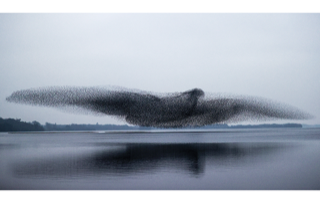
These intelligent birds bring Elizabeth Barrett Browning’s poem to light:
The earth is crammed with heaven,
and every common bush afire with God
But only he who sees takes off his shoes.
Browning reminds us that there are signs of God all throughout the natural world if we are willing to look for them. If God is communicating with us through his Creation, then what is the Supreme Creator, our Heavenly Father, trying to tell us through elegant sky art? Maybe it is the realization that starlings work together to survive. They respond to six or seven of their closest neighbors—a concept that we constantly strive for while ministering to one another in our ward families. But I think there is something even more fundamental happening here. Murmuration reveals that beauty is essential. Beauty is divine. The earth is intended to be pleasing, to enliven our minds and our spirits. When the earth thrives, we thrive too. So what is our role in helping the earth thrive? I believe it begins with a sincere reverence for her beauty.
Scientist, naturalist and award-winning author Rachel Carson offers sage advice about the importance of maintaining a sense of wonder about the world. She writes in her book The Sense of Wonder:
“Those who contemplate the beauty of the earth find reserves of strength that will endure as long as life lasts. There is symbolic as well as actual beauty in the migration of birds, the ebb and flow of the tides, the folded bud ready for the spring. There is something infinitely healing in the repeated refrains of nature, the assurance that dawn comes after night and that spring comes after the winter.”

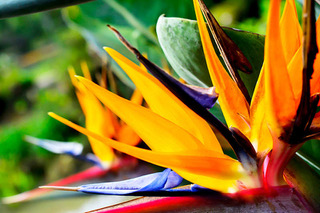
The beauty of God’s Creation is a gift to humankind. The natural beauty that surrounds us can help us move from conflict to calm, from chaos to enchantment. If we preserve this earth, then it will eloquently witness of our God. By making the world so beautiful, God is teaching us how to love. We love God when we fall in love with his Creation.
May we use our minds and our hearts to think about the decisions we make that effect the health of our planet. May we take the time to see that God is trying to communicate with us through a “glorious sunset, or the sun shining through the forest canopy while a bird sings, or while lying down in some quiet place and looking up and up and up into the heavens as the stars gradually emerge from the fading of day’s light.” May we move through the world and be transfixed with wonder and reverence at the staggering knowledge that “it pleaseth God that he hath given these things unto men.” D&C 59: 18-20
Mary Favro teaches Art History and Humanities at Ensign College. She is currently a doctoral student at Wake Forest University’s Divinity School where she studies theology of the arts and spiritual formation. She and her family love to explore the natural world together, discovering their own curiosities along the way.